For most people, the Everest Base Camp trek is the one that started the dream of Nepal. It is a two-week walk through the Khumbu, the home of the Sherpa people. You follow prayer-flagged trails past monasteries and stone villages to the foot of the world's highest mountain, then climb Kala Patthar at dawn for the view everyone wants.
EBC suits fit trekkers with at least two weeks, a sensible attitude to altitude and a budget that can absorb Lukla flights. You do not need climbing experience. It is not for someone with only a week, or anyone who really wants solitude in October and April.
Almost everyone flies to Lukla (2,860 m). From there the trail follows the Dudh Koshi river to Phakding, enters Sagarmatha National Park at Monjo and climbs steeply to Namche Bazaar, the trading hub of the Khumbu. After an acclimatisation day, the trail traverses to Tengboche, home to the region's most famous monastery, and climbs to Dingboche for a second rest day.
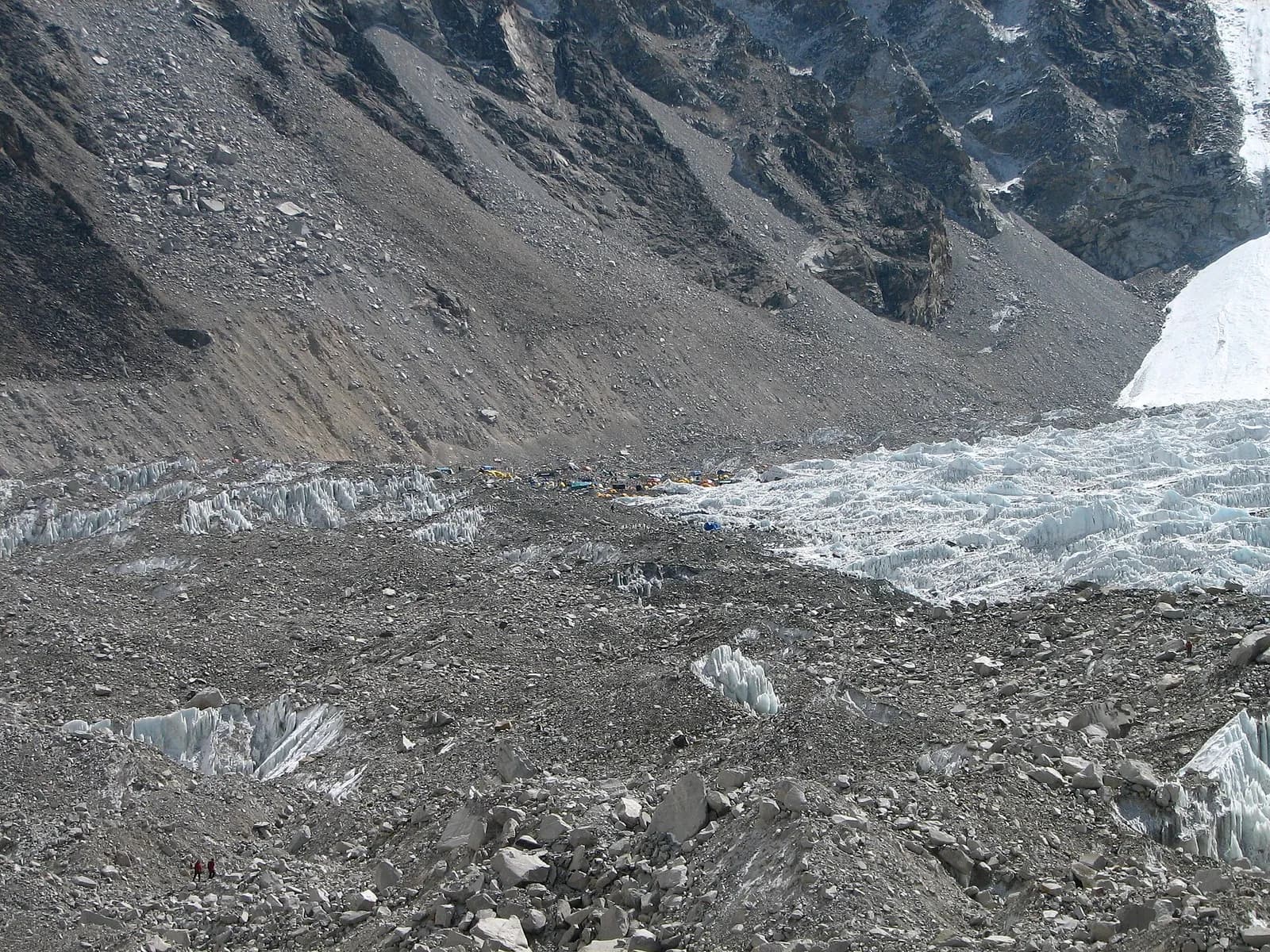
Beyond Dingboche you are above the trees. You pass the Thukla memorials, follow the Khumbu Glacier to Lobuche and Gorak Shep, and walk out to Base Camp. Next morning, Kala Patthar gives the best summit view of Everest. The way down is much quicker: two or three days back to Lukla.
October and November are the clearest. April and May are warmer, and in May you see the Everest expedition camp at its busiest. December to February is cold and quiet but usually clear. Monsoon (June to September) is cloudy and wet, and Lukla flights get cancelled often.
Difficulty and altitude
Expect five to seven hours of walking most days on rocky, dusty paths. The real challenge is altitude: Gorak Shep is about 5,164 m, and you sleep there. Two rest days, in Namche and Dingboche, are the minimum. Use them for short hikes higher up and come back down to sleep.
Know the signs of acute mountain sickness: headache, nausea, dizziness and fatigue. If they get worse, go down. Fluid in the lungs or on the brain (HAPE or HACE) can kill quickly, and descent and helicopter evacuation are the treatment. There is an HRA aid post in Pheriche in season.
Permits and costs in 2026
You need the Sagarmatha National Park entry permit (NPR 3,000 for foreigners) and the Khumbu Pasang Lhamu Rural Municipality permit (about NPR 3,000). The TIMS card is not used in Khumbu. The park permit is available in Kathmandu or at Monjo; the municipality permit is sold in Lukla or Monjo.
Lukla flights are the biggest single cost, at about US$400–500 return for foreigners. Teahouse food gets very expensive above Namche because everything comes up on porters and yaks. Budget US$25–45 a day for food, plus charging and wifi. The price on this page is a typical starting price for a guided trip including flights; message us for a quote.
In April 2023, the Nepal Tourism Board required foreign trekkers in national parks and conservation areas to hire licensed guides. The Khumbu Pasang Lhamu Rural Municipality publicly said it would not enforce that rule in its area, and independent trekking has continued in the Everest region since. Rules can change, so check the latest in Kathmandu. Even if a guide is not compulsory, a local guide helps with flight rebookings, finding rooms in Gorak Shep and making safe altitude decisions.
Getting there and where to stay in Kathmandu
Spend at least two nights in Kathmandu: one before your flight to sort permits and gear, and a spare one after, because Lukla flights are often delayed by weather. Thamel is the obvious base, with gear shops, money exchange and early taxis. See our Kathmandu hostels for cheap beds; Alobar1000 is a popular backpacker option. Our Kathmandu backpacker guide covers the rest.
If your flight leaves from Ramechhap, you will usually drive there in the early hours of the morning. Your guide or agency normally arranges a shared jeep.
Teahouses and food
Lodges in the Khumbu are good up to Namche and Dingboche, with heated dining rooms, bakeries and even espresso. Above that they get simple and cold. Rooms are cheap if you eat in the lodge. Use an Everest Link wifi card instead of buying wifi at every stop.
- Down jacket, fleece, thermals, warm hat and gloves
- Sleeping bag rated to -15°C for autumn and spring
- Broken-in trekking boots and warm socks
- Trekking poles
- Sunglasses (category 3 or 4) and strong sunscreen
- Water filter or tablets: do not buy plastic bottles in a national park
- Rehydration salts and a basic medical kit
- Enough cash: Namche has ATMs, but they are not reliable
Never skip acclimatisation days. Do not use the Lukla flight buffer for trekking days. Keep a copy of your insurance policy (with helicopter rescue to 6,000 m) and your passport with your guide. Walk on the mountain side of the trail when yaks pass.
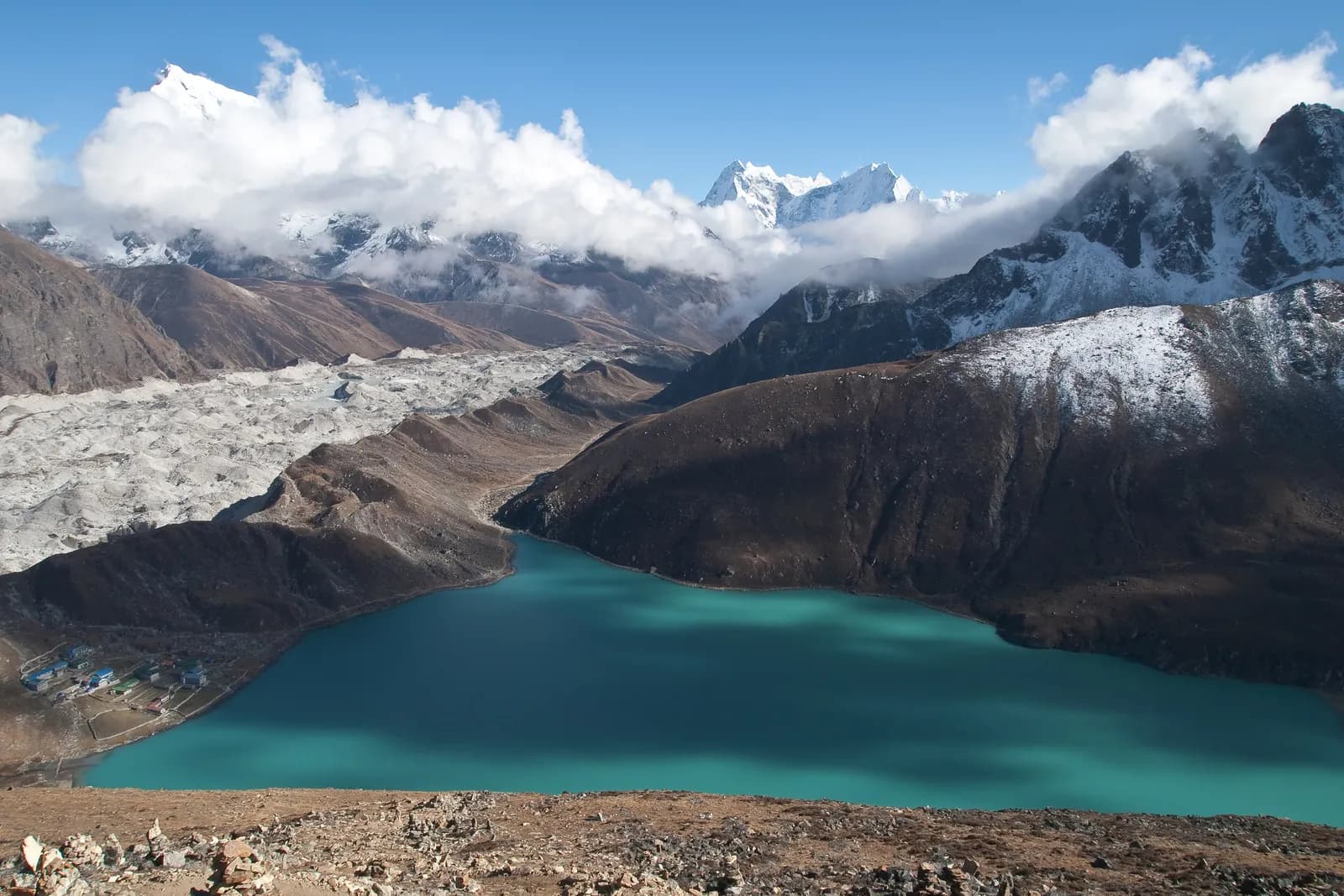
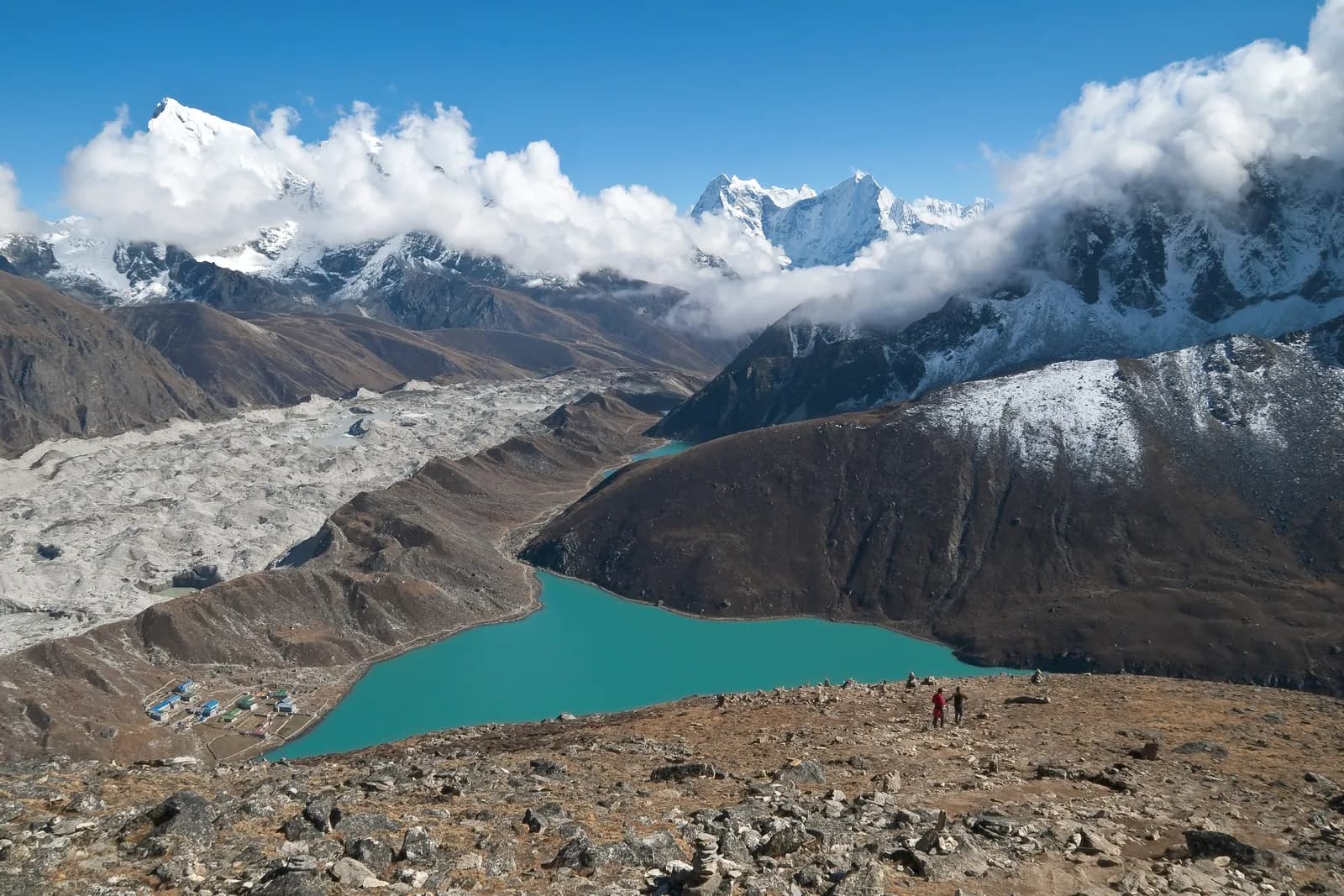
For fewer people and turquoise lakes, try the Gokyo Lakes Trek. If you are fit and experienced, the Everest Three Passes Trek links Gokyo and EBC over three high passes.

 Hard