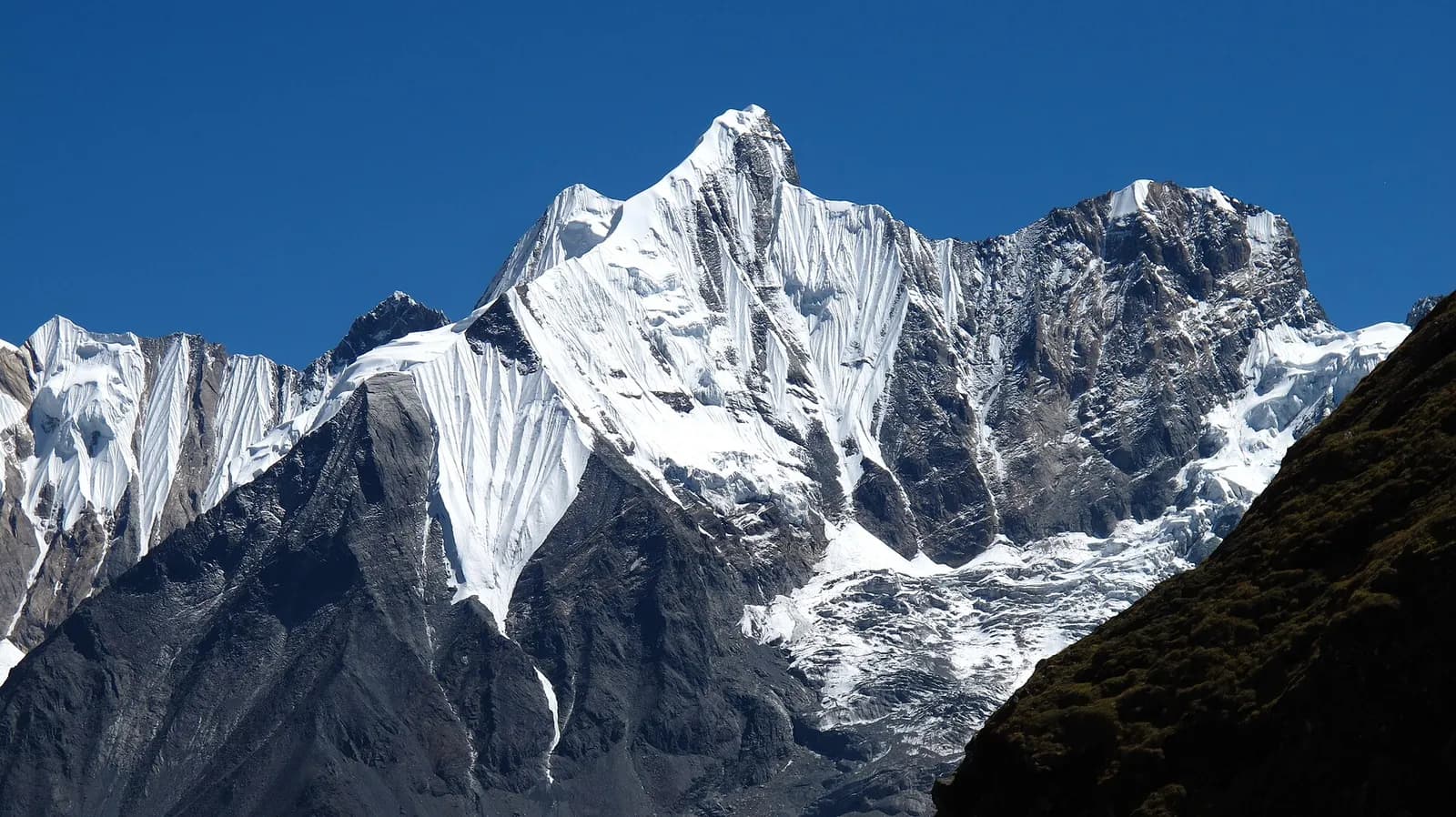
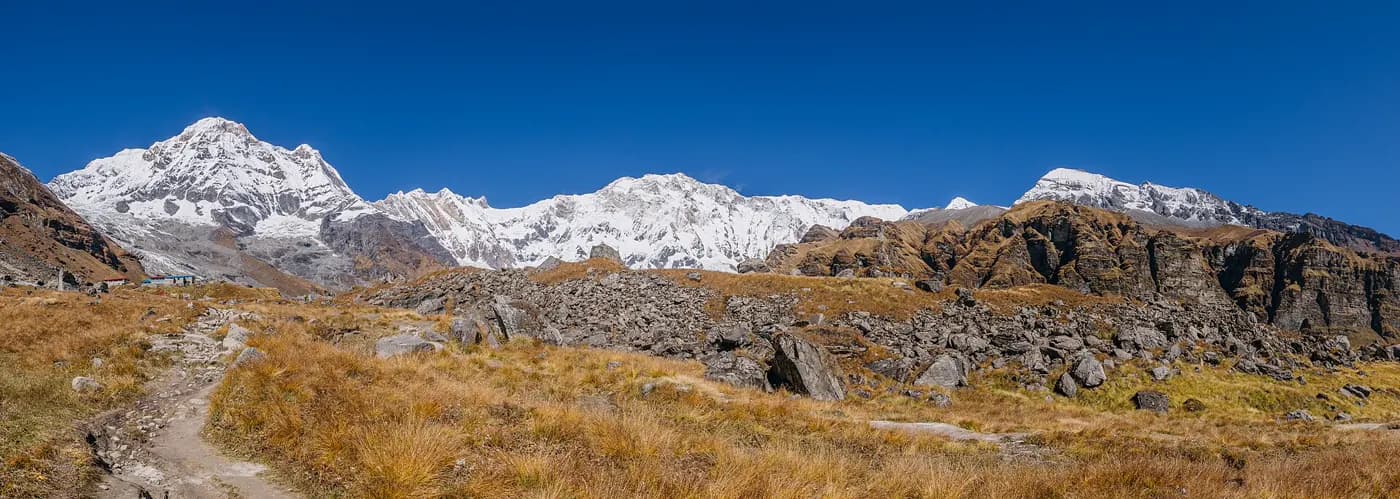
Annapurna Base Camp, or ABC, is the trek that gets people hooked on Nepal. In about a week from Pokhara you go from rice terraces and buffalo to a high glacial bowl ringed by Annapurna I (8,091 m), Hiunchuli, Annapurna South, Gangapurna and the sharp fin of Machhapuchhre. Locals call the bowl the Annapurna Sanctuary, and standing in it at sunrise is hard to forget.
It is a great first Himalayan trek for fit beginners, families with teenage kids and anyone short on time who still wants to sleep at 4,000 m. If you want solitude it is less ideal: October and April are busy, and the narrow gorge funnels everyone onto one trail.
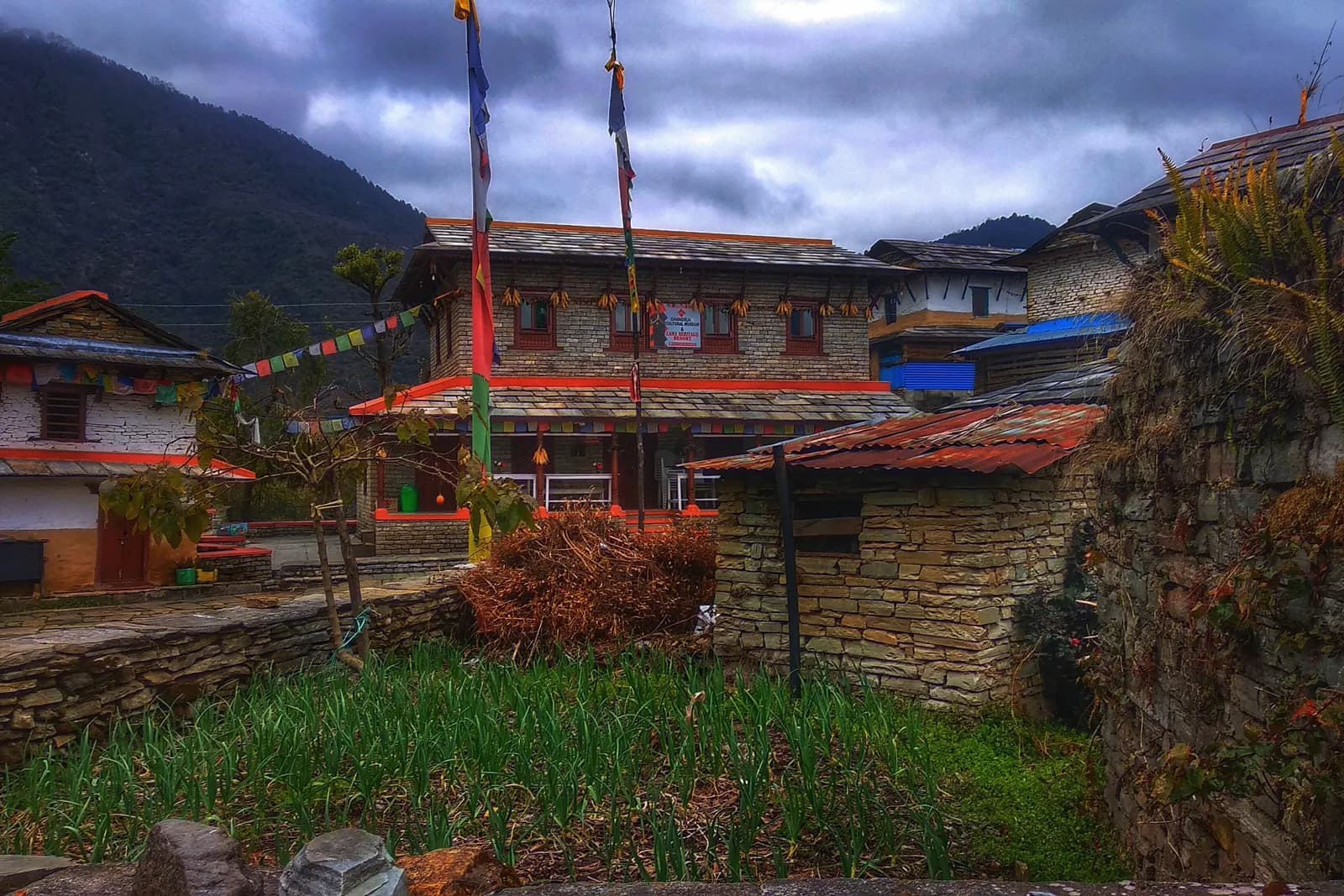
Roads now reach much further than they did ten years ago, so most people jeep from Pokhara to Siwai, Jhinu or Nayapul and start walking from there. The first big village is Chhomrong, a Gurung settlement spread across a hillside with a direct view of Annapurna South.
From Chhomrong the trail drops to the river, climbs to Sinuwa, and follows the Modi Khola gorge north through Bamboo, Dovan, Himalaya and Deurali. The gorge is beautiful but steep-sided, and the sun disappears early in the afternoon. The valley opens at Machhapuchhre Base Camp (MBC, about 3,700 m). One more push takes you to ABC at 4,130 m.
The way back follows the same trail as far as Chhomrong, then drops to Jhinu Danda for the hot springs, which feel incredible after a week without a proper shower.
Autumn (October to November) is the classic season: dry, stable and clear. It is busy, and rooms at Deurali, MBC and ABC can run out. Spring (March to May) brings rhododendrons in flower and warmer days, with more afternoon cloud. Winter (December to February) is cold and quiet; snow can block the upper gorge after storms. Monsoon is wet, leechy and cloudy, but the villages are green and almost empty.
Difficulty and altitude
Nothing on ABC is technical. The challenge is endless stone steps, especially around Chhomrong and Sinuwa, which you climb in both directions. Expect five to seven hours of walking most days.
Altitude is real but manageable. Many trekkers sleep at MBC before ABC to soften the jump. Typical early symptoms are headache, poor sleep and loss of appetite. If they get worse instead of better, go down. ABC is not worth a helicopter ride.
The section between Deurali and MBC runs under steep slopes that shed avalanches after heavy snowfall, typically from January to April. Lodges close the trail when needed. Do not push through alone after fresh snow, and check conditions in Chhomrong.
Permits and costs in 2026
You need the ACAP permit (NPR 3,000 for foreigners) and a TIMS card (NPR 2,000). Get both in Pokhara at the Nepal Tourism Board office or online. A permit bought at a checkpoint costs double.
Above Chhomrong, prices are set by the local lodge committee and rise with every stop because everything is carried up. Dal bhat might cost twice as much at ABC as in Chhomrong. Budget US$20–35 a day for food. Rooms are cheap if you eat where you sleep. Showers, wifi and charging cost extra.
The price on this page is a typical starting price for a guided trip with transport and permits. Message us for a current quote from our local guides; prices move with season and group size.
Since April 2023 the Nepal Tourism Board rule says foreign trekkers in conservation areas must go with a licensed guide through a registered agency. You will still see some independent trekkers, but checks happen and the rule can be enforced at any time. A good guide also books ahead at MBC and ABC in peak weeks, which can be the difference between a bed and a dining-room floor.
Getting there and where to stay
Fly or bus from Kathmandu to Pokhara (see our Kathmandu to Pokhara bus guide). Spend at least one night in Lakeside before you start to buy permits and gear and to store luggage.
For backpackers we recommend Lazy Lads Backpackers Hostel. It is cheap, social and full of people heading out on or coming back from treks. Zostel Pokhara is another good option. Browse all Pokhara hostels for more.
Teahouses and food
Every stop has lodges with twin rooms, shared bathrooms and a central dining room. Above Bamboo, rooms get basic and cold. A sleeping bag rated to about -10°C is worth carrying in autumn and winter. Note that the Sanctuary is sacred to local communities, so traditionally no meat is sold above Chhomrong.
- Layers: thermal top, fleece and a warm down jacket for evenings at ABC
- Waterproof jacket (afternoon showers are common in the gorge)
- Sleeping bag, headtorch and trekking poles
- Sunscreen, sunglasses and a hat: snow glare at ABC is intense
- Water filter or tablets, a basic first-aid kit and blister plasters
- Enough Nepali rupees in cash for the whole trek
Walk early, rest early. The gorge clouds over by afternoon. Keep to the trail in bad weather, respect lodge advice on avalanches and make sure your insurance covers helicopter evacuation up to at least 4,500 m.
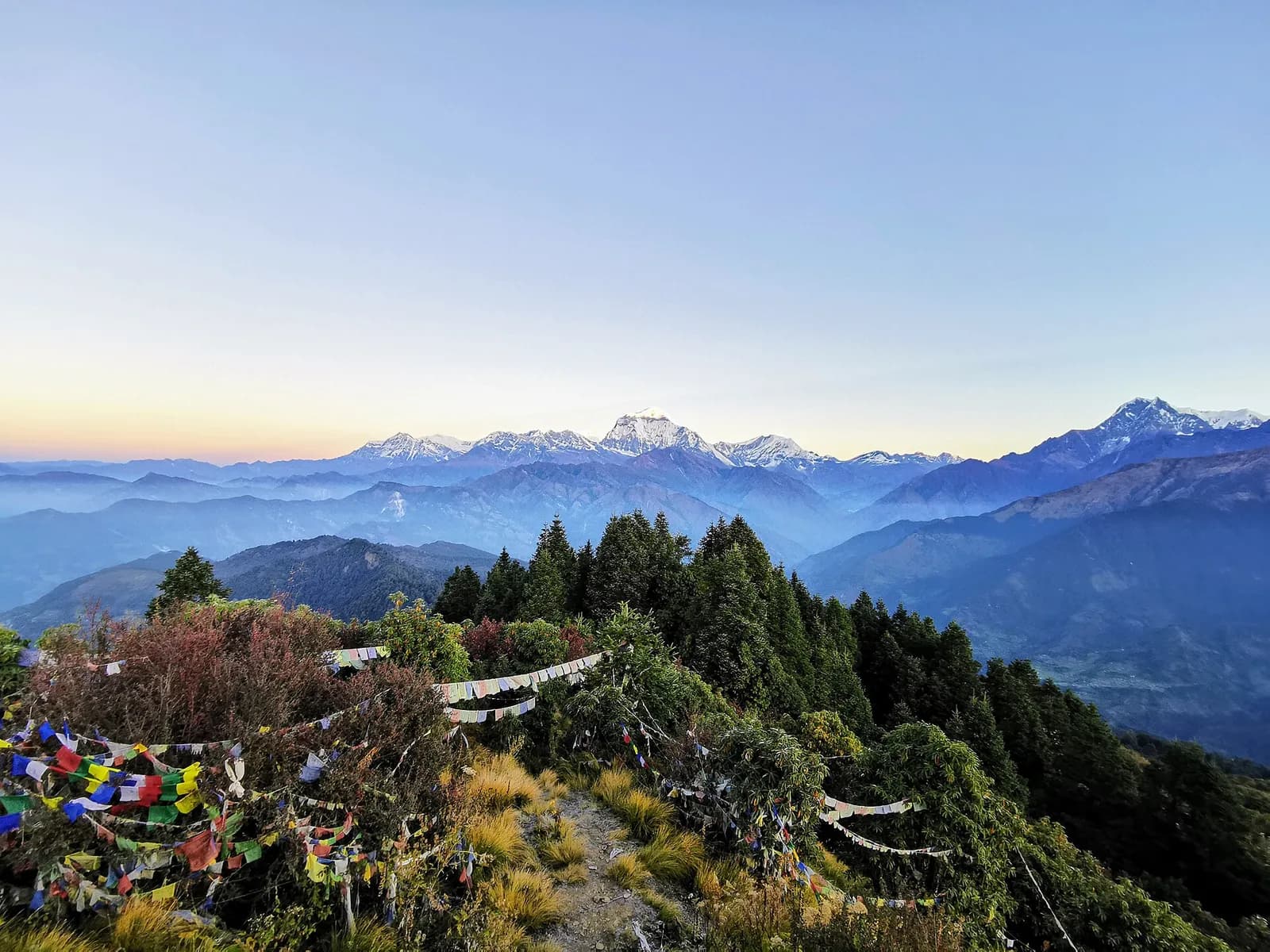
Add Poon Hill at the start for a famous sunrise (two extra days). If you want something quieter with similar views, look at the Mardi Himal Trek on the next ridge east.

 Hard