Skip to content
Nepal Hostels
ModerateAnnapurna regionTeahouse trek with a licensed local guide

Mardi Himal Trek

A short, steep ridge trek from Pokhara that climbs through rhododendron forest to High Camp and the Mardi Himal viewpoints, right under Machhapuchhre (Fishtail). Big mountain views in under a week.

Days
4–7
Max altitude
4,500 m
Best season
Late September to November, and March to May
Group
1–12 people
Trekker on a ridge facing Machhapuchhre at dusk on the Mardi Himal Trek (photo: Nir Bahadur Gurung, CC BY-SA 4.0, via Wikimedia Commons)
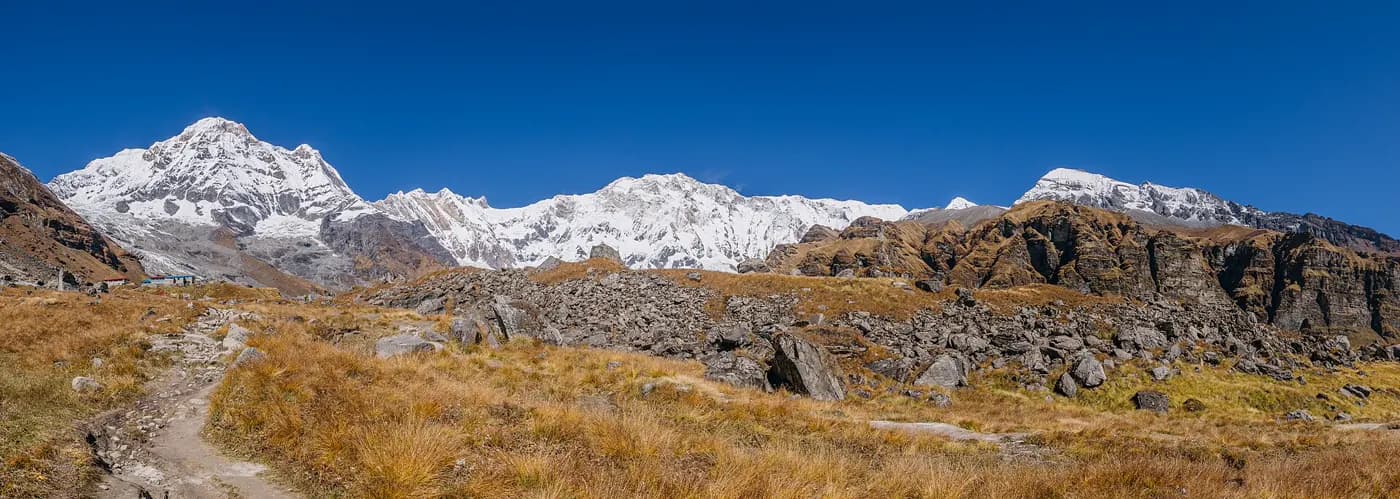
Annapurna massif above the Annapurna sanctuary
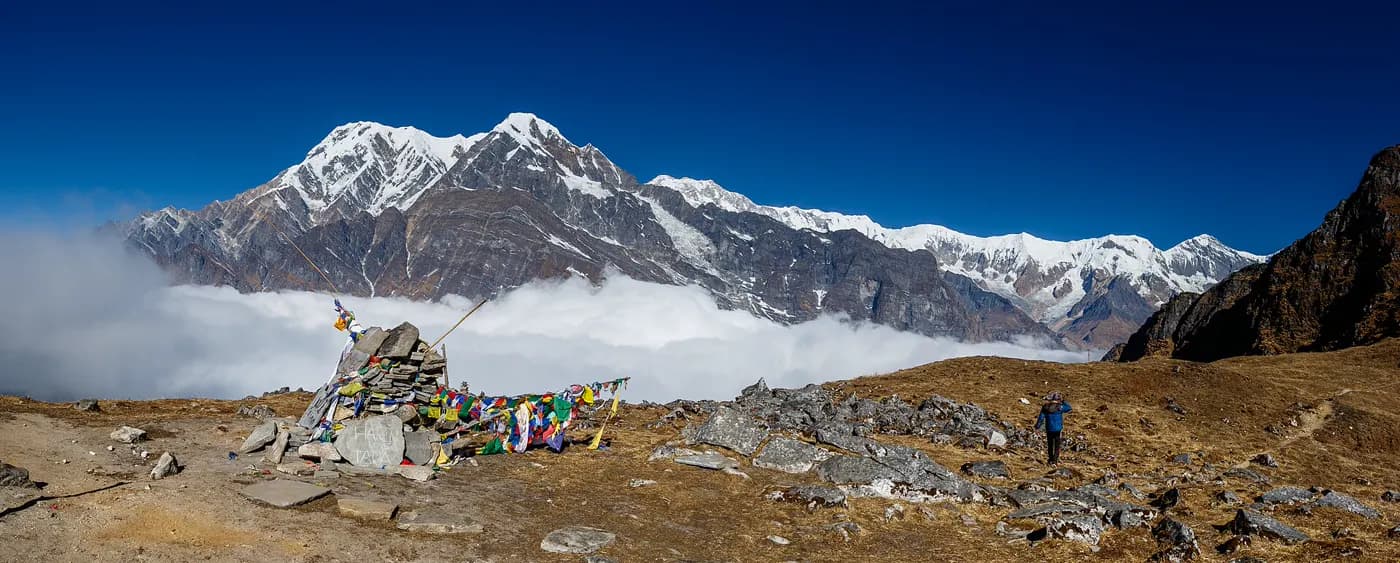
Mardi Himal base camp panorama
⛰ 4,500 mLate September to November, and March to May
  • Licensed local guidesGovernment-licensed, from trail villages
  • Reply within ~1 hourWhatsApp or enquiry form
  • No booking feePay your guide directly
  • Permits handledAnnapurna Conservation Area Permit (ACAP), TIMS card

The route

About this trek

Mardi Himal is the trek people in Pokhara recommend when you say you have a week, decent legs and want to get properly close to the mountains. It was only opened to trekkers around 2012, and it still feels quieter than the Annapurna Base Camp trail. You walk along a narrow grassy ridge with Machhapuchhre, the Fishtail, so close it feels like it is leaning over you.

Who this trek suits

It suits trekkers with five to seven days who want real altitude and big views without committing to two weeks. It works well as a first "proper" Himalayan trek if you are reasonably fit, and as a second trek for people who have done Poon Hill and want something wilder.

It is not ideal if you hate steep climbing. The route gains height quickly. There are no flat valley days to recover, and the descent from High Camp is hard on the knees.

Route overview

Most groups start at Kande, about an hour's drive from Lakeside, and climb to Australian Camp, a grassy shelf with a famous sunrise. From there the trail runs through Pothana and Deurali, then into a long stretch of rhododendron and oak forest up to Forest Camp.

Above Forest Camp the trees break at Low Camp, around 3,000 m, and from there on it is ridge walking: Badal Danda, then High Camp at about 3,580 m. The final day goes up to the Upper Viewpoint and, if you have the energy, on to Mardi Himal Base Camp at about 4,500 m.

To come down, most people take the newer trail from Low Camp to Siding village, where jeeps wait for Pokhara. The other option is dropping to Landruk or Lwang and linking towards Ghandruk.

Best time to go

October and November give the clearest skies and the most reliable views. That is also when teahouses at High Camp fill up, so start early each day.

March to May is the other good window. April brings rhododendrons in flower through the forest section, although haze builds by late afternoon. Monsoon (June to August) means leeches, cloud and slippery mud, and the ridge is wet and sometimes unsafe. December to February is clear and cold, with snow possible above Low Camp.

Difficulty and altitude

The walking days are short, often four to six hours, but steep. The trail above High Camp is rocky, narrow in places and exposed to wind. In snow it becomes genuinely dangerous without microspikes and someone who knows the line.

Altitude is moderate. You sleep no higher than about 3,580 m. Most people feel a headache or breathlessness at High Camp but nothing serious. The danger is rushing: going from Pokhara at 800 m to 4,500 m in four days is fast. If you feel unwell at High Camp, the Upper Viewpoint is a perfectly good turnaround point.

Permits and costs in 2026

You need the Annapurna Conservation Area Permit (ACAP, NPR 3,000 for foreigners) and a TIMS card (NPR 2,000). Both are issued at the Nepal Tourism Board office in Pokhara or Kathmandu, and ACAP can also be bought online through NTNC. A permit bought at a trail checkpoint costs double, so sort it out in town.

Teahouse rooms are cheap, often NPR 500–1,000, because owners expect you to eat dinner and breakfast with them. Food is where the money goes: dal bhat costs more the higher you climb, and a plate at High Camp can be double the Pokhara price. Budget about US$20–30 a day for food and hot drinks.

A licensed guide costs about US$25–35 a day and a porter about US$20–25. The price shown on this page is a typical starting price for a guided trip from Pokhara. It changes with group size and season, so message us for a quote from our local guides.

The licensed guide rule

Since April 2023 the Nepal Tourism Board has required foreign trekkers in national parks and conservation areas to trek with a licensed guide booked through a registered agency. On the Annapurna side this applies to Mardi Himal. Enforcement at checkpoints has been uneven, and you will still meet solo walkers, but you risk being turned back or fined, and you have nobody if something goes wrong on the ridge.

Honestly, a good local guide earns their fee here. They know which lodge at High Camp will have a bed in October, when the ridge above is too icy and how to read the weather.

Getting there and where to stay in Pokhara

Pokhara is the base. Most people arrive by tourist bus or flight from Kathmandu (see our Kathmandu to Pokhara bus guide). Spend a night in Lakeside to buy permits and any missing gear, and leave your big bag behind.

For a cheap, sociable base we like Lazy Lads Backpackers Hostel in Lakeside. It is a backpacker favourite with lots of trekkers coming and going, and it is a good place to find trek partners and swap trail news. Zostel Pokhara is another solid pick. See all Pokhara hostels for more options.

Teahouses and food

Lodges are simple: twin rooms with thin walls, shared toilets and a warm dining room with a stove. Higher up, at Low Camp and High Camp, rooms are basic and blankets are thick but you will want a sleeping bag rated to about -10°C in autumn and winter.

Dal bhat comes with free refills and is the best value meal on the trail. Noodle soups, fried rice, momos and Tibetan bread are on almost every menu. Bring water purification tablets or a filter rather than buying plastic bottles.

What to pack

  • A warm down jacket and a fleece: High Camp drops below zero at night in autumn
  • Sleeping bag rated to around -10°C
  • Trekking poles (your knees will thank you on the way down to Siding)
  • Headtorch for the pre-dawn start to Base Camp
  • Microspikes from December to March
  • Water filter or purification tablets, sunscreen, sunglasses and a buff
  • Cash in Nepali rupees: there are no ATMs past Pokhara

Safety tips

Start the summit day early, before cloud rolls up the valleys. Turn around if visibility drops on the ridge: the trail beyond High Camp has steep drops on both sides. Tell your hostel your plan and expected return date, and make sure your travel insurance covers trekking to 5,000 m including helicopter evacuation.

Mardi Himal vs other short treks

Compared with Poon Hill, Mardi Himal is quieter, steeper and much closer to the big peaks. Compared with Annapurna Base Camp, it is shorter and less crowded, but you do not stand inside the amphitheatre. Plenty of people do Mardi first and come back for ABC.

Day by day

4–7 day itinerary from Kande (1 hour from Pokhara)

  1. 1

    Pokhara to Kande, walk to Australian Camp and Pothana

    1,890 m

    An hour by jeep or taxi to Kande, then a short, steep climb to Australian Camp for your first Annapurna views. Carry on along the ridge to Pothana for the night.

  2. 2

    Pothana to Forest Camp

    2,550 m

    A quiet day almost entirely in rhododendron and oak forest. Little view, lots of birdsong. Forest Camp (also called Kokar) has a few simple lodges.

  3. 3

    Forest Camp to Low Camp and Badal Danda

    3,250 m

    The trees thin out and Machhapuchhre suddenly fills the sky at Low Camp. Most people push on another hour or so to Badal Danda, the "cloud ridge", for sunset.

  4. 4

    Badal Danda to High Camp

    3,580 m

    A short day up the open ridge. Arriving early helps your body adjust before the big push. Sunset over Annapurna South and Hiunchuli from High Camp is the reason many people come.

  5. 5

    High Camp to Mardi Himal Base Camp and back, descend to Siding or Low Camp

    4,500 m

    Start around 4–5 am with a headtorch. The upper viewpoint (about 4,200 m) is enough for many. Base Camp is another 2–3 hours of rough moraine. Then a long, knee-heavy descent.

  6. 6

    Siding to Pokhara by jeep

    1,750 m

    Walk down through farm villages to the road at Siding (or Lwang) and take a shared or private jeep back to Lakeside for a hot shower and a cold drink.

Included

  • Licensed local trekking guide
  • ACAP permit and TIMS card
  • Teahouse rooms on the trek (twin share)
  • Pokhara–Kande transport and Siding–Pokhara jeep
  • Guide insurance, food and lodging

Not included

  • Meals and drinks on the trek (pay as you go)
  • Porter (optional, about US$20–25 a day)
  • Hot showers, wifi and charging at teahouses
  • Travel insurance with helicopter rescue to 5,000 m
  • Hostel nights in Pokhara
  • Tips for guide and porter

Good to know

Mardi Himal FAQ

How many days do I need for the Mardi Himal Trek?

Five to six walking days from Pokhara is comfortable. Fit trekkers sometimes do it in four, but you lose the slower acclimatisation at Badal Danda and High Camp.

How hard is the Mardi Himal Trek?

It is moderate. The days are short, but the trail is steep, with long climbs through forest and a rough, exposed ridge above High Camp. Good knees and trekking poles help more than raw fitness.

Do I need a guide for Mardi Himal?

Under Nepal Tourism Board rules in force since April 2023, foreign trekkers in conservation areas like ACAP should go with a licensed guide arranged through a registered agency. In practice checks vary, but a local guide also knows which teahouses have space in peak season.

What is the highest point of the Mardi Himal Trek?

Mardi Himal Base Camp at about 4,500 m. Many people turn around at the Upper Viewpoint at about 4,200 m, which already has the full Annapurna South, Hiunchuli and Machhapuchhre panorama.

Is altitude sickness a risk on Mardi Himal?

It is lower than on ABC or Everest because you sleep no higher than about 3,580 m, but the climb is fast. Drink plenty, walk slowly and do not go to Base Camp if you have a bad headache or nausea at High Camp.

Can I do the Mardi Himal Trek in winter?

Yes, December to February is doable with clear views, but High Camp is very cold and snow can make the ridge above it dangerous. Some lodges close. Go with a guide and microspikes.

How much does the Mardi Himal Trek cost?

Independent-style budgets run about US$30–45 a day for food and rooms, plus permits and transport. A guided trip from Pokhara with a local guide usually starts around US$350–450 for five or six days.

Where should I stay in Pokhara before the trek?

Lakeside is easiest for permits, gear shops and jeeps to Kande. Backpackers like Lazy Lads Backpackers Hostel, which is set up for trekkers, and most hostels will store your extra luggage while you walk.

Is there phone signal and wifi on the trail?

NTC and Ncell signal is patchy but works in many places, including parts of High Camp. Lodges sell wifi for a small fee. Charging costs a few hundred rupees per device higher up.

Mardi Himal or Poon Hill: which is better?

Poon Hill is easier, with more villages and stone steps. Mardi Himal is quieter, higher and closer to the mountains. If you have five days and decent fitness, Mardi Himal gives more drama.

Similar treks

You might also like

Annapurna Base Camp TrekModerate

Annapurna region

Annapurna Base Camp Trek

Walk up the Modi Khola gorge from Pokhara into the Annapurna Sanctuary, a ring of 7,000–8,000 m peaks around Annapurna Base Camp (4,130 m). Stone steps, Gurung villages, bamboo forest and a hot spring on the way down.

  • 7–11 days
  • 4,130 m
  • Nayapul, Jhinu or Siwai (by jeep from Pokhara)

from $650

Thorong La, Himalaya, NepalHard

Annapurna region

Annapurna Circuit Trek

Nepal's great classic loop around the Annapurna massif, crossing the Thorong La pass (5,416 m) from the green Marsyangdi valley into the dry, Tibetan-style landscapes of Manang and Mustang.

  • 10–18 days
  • 5,416 m
  • Besisahar, then jeep to Chame or Dharapani

from $900

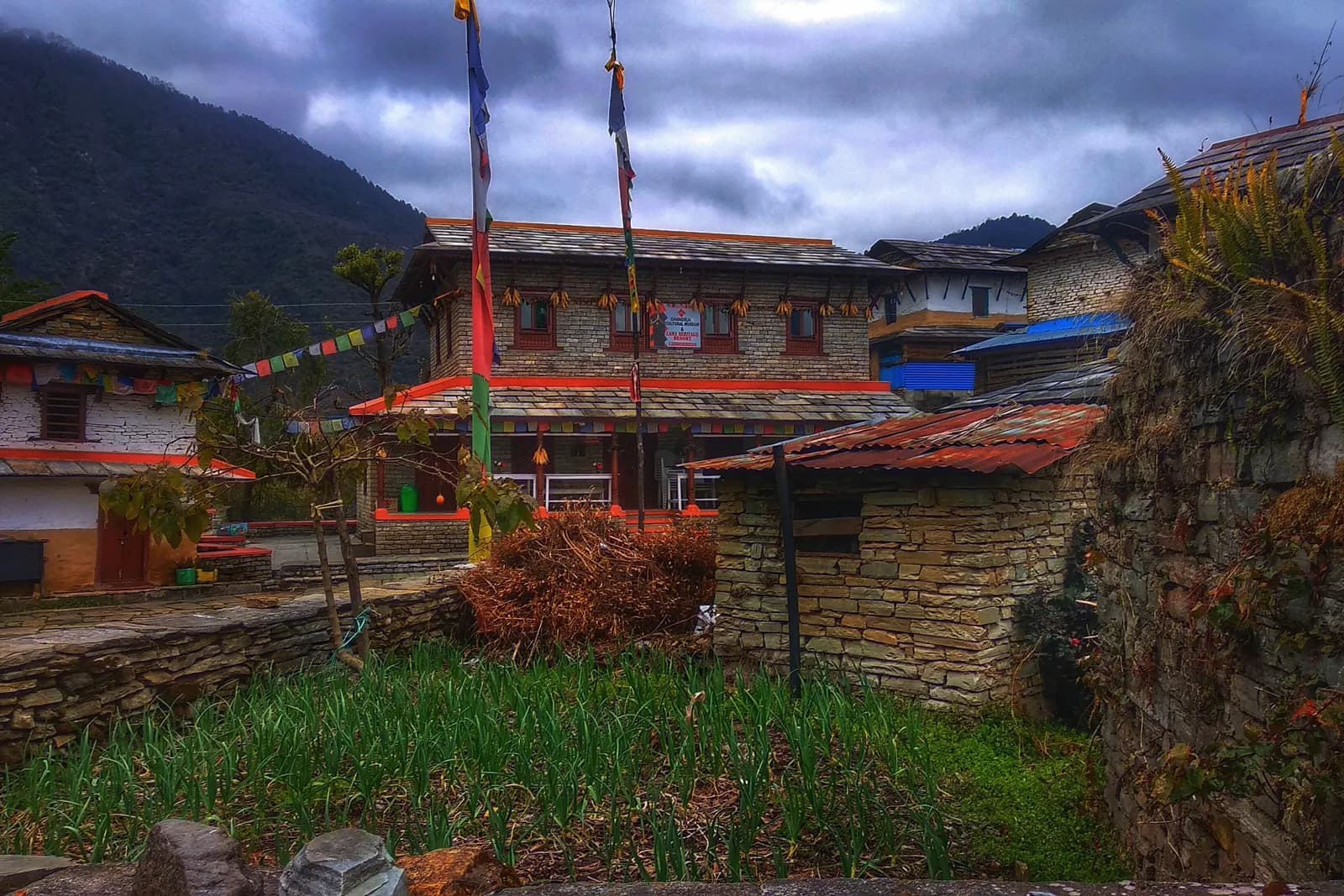
Stone houses and terraced fields of Ghandruk village, Kaski, Nepal (photo: Hopingyousuf, CC BY-SA 4.0, via Wikimedia Commons)Easy

Annapurna region

Ghandruk Village Trek

A short, easy loop from Pokhara to Ghandruk, a stone-built Gurung village facing Annapurna South and Machhapuchhre, then across to Landruk and Australian Camp. Perfect for two or three days.

  • 2–4 days
  • 2,060 m
  • Kimche or Nayapul (by jeep from Pokhara)

from $180

from$350

Ask a guide